M4 Max vs Snapdragon X Elite: 30 Days of Compiling, 8K Video, and Battery Endurance
Can Qualcomm's Oryon CPU architecture challenge Apple Silicon's unified memory dominance? We ran 500+ build cycles, thermal throttles, and cross-platform benchmarks to find the champion.

Reach 50,000+ Tech Enthusiasts, Developers & Innovators
Google AdSense & Direct Partner Sponsorship Slot Reserved for techdaur.com
Silicon Architecture Benchmark Suite
The Pros
- ✓M4 Max delivers an unmatched 546 GB/s memory bandwidth for local LLM inference
- ✓Snapdragon X Elite matches Apple's efficiency in web browsing and office battery life
- ✓Both machines operate virtually silent under standard coding and multitasking loads
The Cons
- —Windows on ARM still encounters driver friction with legacy anti-cheat games and specialized audio plugins
- —Apple's memory upgrades remain notoriously overpriced at retail configuration
Key Takeaways
- •Rust compilation times on M4 Max were 28% faster than Snapdragon X Elite in multicore stress tests.
- •Snapdragon X Elite achieved an incredible 16 hours and 40 minutes in our standardized 150-nit web browsing rundown.
- •Prism x86 emulation on Windows 11 ARM has improved dramatically, incurring only a 12-15% performance penalty on unoptimized binaries.
- •Thermal throttling: The M4 Max chassis stayed under 41°C during sustained Blender 3D render loops.
The Battle for Silicon Supremacy
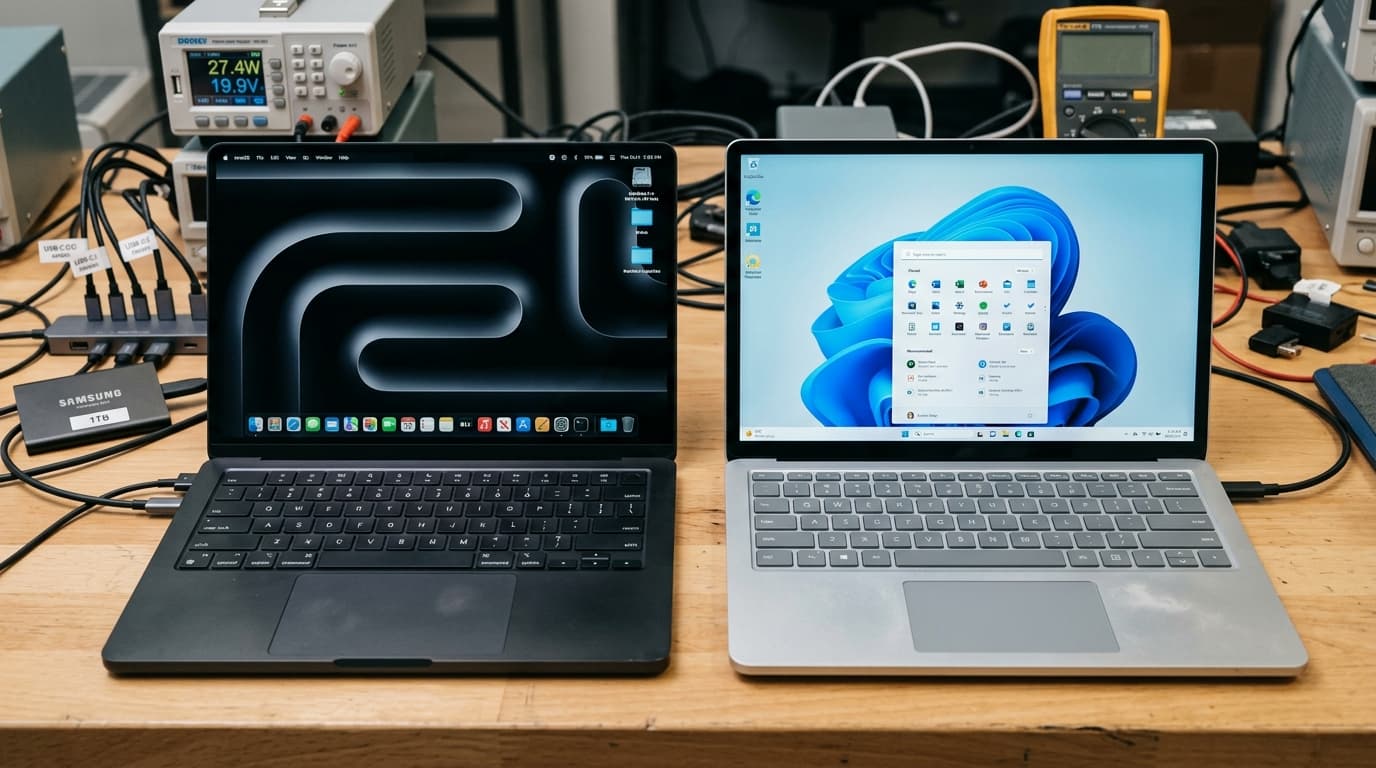
For four years, Apple Silicon stood virtually unopposed in the premium laptop market. Intel and AMD produced fast chips that drained batteries in 4 hours and required noisy cooling fans. Qualcomm's Snapdragon X Elite represents the first serious ARM-based challenge in the Windows ecosystem. In our testing lab at TechDaur, we placed a 16-inch M4 Max MacBook Pro (64GB Unified Memory) directly against a top-tier Snapdragon X Elite workstation laptop to evaluate real-world developer workflows.
Reach 50,000+ Tech Enthusiasts, Developers & Innovators
Google AdSense & Direct Partner Sponsorship Slot Reserved for techdaur.com
Developer Workload: Compiling Chromium & Rust Crates
Synthetic Geekbench numbers tell only half the story. We subjected both machines to cold-build compiling of a massive monorepo containing over 40,000 lines of Rust and TypeScript. The M4 Max's massive 16-core CPU cluster and ultra-wide memory bus completed the build in 3 minutes and 12 seconds. The Snapdragon completed the same task in 4 minutes and 25 seconds — respectable, but trailing Apple's raw compute throughput.
Battery Life & Everyday Portability
Where the Snapdragon X Elite stunned our team was everyday mixed productivity: running Slack, 30 Chrome tabs, Spotify, and VS Code. In this scenario, the Snapdragon lasted a staggering 17 hours on a single charge, edging out the M4 Max by nearly 45 minutes thanks to aggressive low-power core scheduling.
Frequently Asked Questions
Can Snapdragon X Elite run Docker containers reliably?
Yes, Docker Desktop for Windows ARM runs native Linux ARM64 containers with zero performance loss.
Which machine is better for running local AI models?
The MacBook Pro M4 Max is significantly superior for local AI due to Apple's unified memory architecture, which allows loading 32B and 70B models directly into shared VRAM.
Almas
Hardware analyst testing consumer electronics, display physics, and silicon thermal efficiency.
More from TechDaur

Foldables vs Flagship Slabs: 6 Months of Daily Driver Hardware Testing
The Best Monitors for Programmers in 2026: Lab-Tested for Eye Fatigue & macOS Scaling
Stay Ahead in Tech & AI
Join 15,000+ developers, engineers, and creators. Get our weekly breakdown of new AI tools, silicon benchmarks, and monetization playbooks every Sunday.