ARM vs RISC-V in 2026: Why Open-Source Silicon is Winning Hyperscale Cloud Infrastructure
From AWS Graviton4 to Tenstorrent and Alibaba XuanTie, proprietary instruction set architectures are facing an existential challenge from open RISC-V compute fabrics. Here is the architectural deep dive.

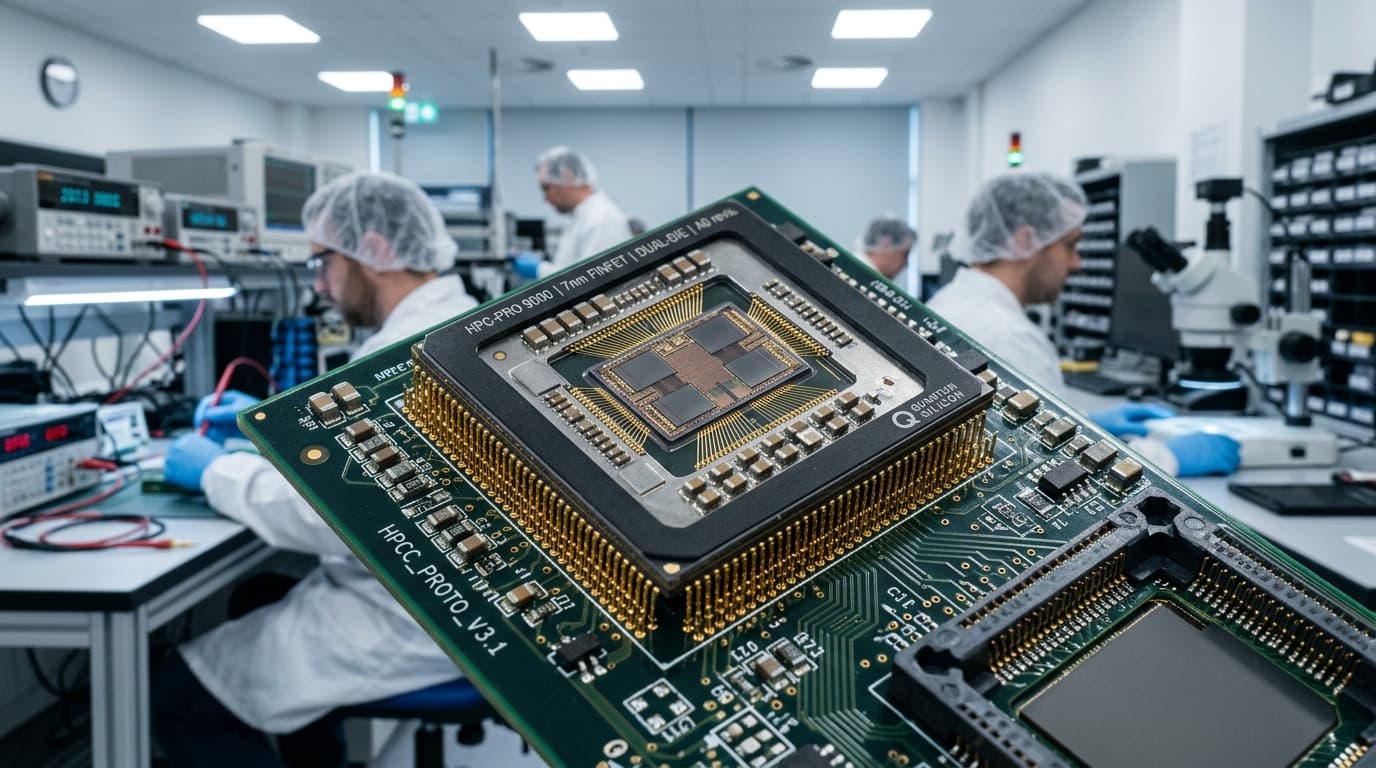
RISC-V Vector 1.0 Hyperscale Silicon
The Pros
- ✓Zero intellectual property royalty fees cuts custom ASIC licensing costs by tens of millions of dollars
- ✓Modular instruction set extensions allow hyperscalers to fuse custom AI tensor matrix accelerators directly into the CPU pipeline
- ✓Eliminates geopolitical export control vulnerabilities for global semiconductor manufacturers
The Cons
- —Software toolchain and Linux distribution package parity still trails mature ARM64 ecosystem by 15-20%
- —High-performance out-of-order execution cores from commercial vendors are only now reaching 3nm volume production
Key Takeaways
- •Hyperscalers like Google, Meta, and Alibaba are investing billions into custom RISC-V accelerator cores to bypass ARM licensing fees.
- •The RISC-V Vector (RVV) 1.0 extension provides dynamic vector register grouping, outperforming fixed 128-bit ARM NEON in custom DSP workloads.
- •ARM maintains dominance in high-end mobile phones and client laptops, but its datacenter moat is rapidly eroding.
The Economics of Silicon Licensing: Why ARM's Model Is Under Fire
For three decades, ARM was the darling of the fabless semiconductor revolution. It licensed efficient instruction sets to Apple, Qualcomm, and Amazon, collecting royalties on billions of chips. But as ARM shifted toward restrictive core-licensing contracts and higher per-device royalties, hyperscalers doing trillions of cloud operations per day realized they were paying billions for standard instruction decoding that could be achieved with open standards. RISC-V, maintained by RISC-V International, is a clean, royalty-free, open-standard instruction set architecture (ISA) born at UC Berkeley.
Architectural Agility: Custom Vector Extensions
The fundamental technical advantage of RISC-V is its modularity. Unlike x86 (which carries forty years of legacy register baggage) or ARM (which requires rigid compliance specifications), a RISC-V core starts with a tiny 40-instruction base integer set. Designers can add standard extensions for atomic operations (A), floating point (F/D), vector mathematics (V), or proprietary tensor compute accelerators. Silicon architects can design custom instruction opcodes tailored precisely to their internal database query engines or transformer matrix multiplications.
The Software Toolchain Gap: Closing at Light Speed
The historic argument against RISC-V was the lack of enterprise software. That objection is evaporating rapidly. Upstream Linux kernel support has reached full tier-one maturity. Debian, Ubuntu, and Fedora offer native RISC-V 64-bit root filesystems. Compilers like LLVM 20 and GCC 15 feature auto-vectorization passes specifically optimized for RISC-V Vector 1.0. Within three to five years, deploying containerized microservices to RISC-V cloud instances will be completely transparent to DevOps engineers.
Frequently Asked Questions
Will RISC-V replace Intel and AMD x86 processors in PCs?
In the near term, x86 and ARM will continue to dominate consumer Windows and Mac laptops. RISC-V's primary conquest is happening inside data centers, AI accelerators, and automotive microcontrollers.
Is RISC-V controlled by any single country or company?
No. RISC-V International is incorporated in Switzerland as a non-profit association to guarantee neutrality and global open collaboration.
Jawad Almas
Semiconductor architecture specialist and compiler researcher tracking instruction set ergonomics and silicon fabrication.
More from TechDaur

Inside the 2nm Silicon Revolution: How GAAFET Transistors Are Rescuing Moore's Law
Silicon Photonics Explained: Why Light Will Replace Copper Interconnects in AI Clusters
Stay Ahead in Tech & AI
Join 15,000+ developers, engineers, and creators. Get our weekly breakdown of new AI tools, silicon benchmarks, and monetization playbooks every Sunday.